Why Is Medicai the Best for Streaming Technology?
Many radiology teams still wait minutes to open a scan from another hospital because their PACS cannot stream images fast enough across locations. The delay forces radiologists to switch systems or call for manual file transfers before they can read the study. This article will show exactly what Medicai offers for zero-footprint viewing, how its cloud PACS handles multi-site image routing, and which AI features now run inside the workflow.
By the final section you will know the security certifications attached to each plan, the measured uptime numbers published by the company, and whether the pricing tiers match the size of your imaging volume.
What Is Medicai?
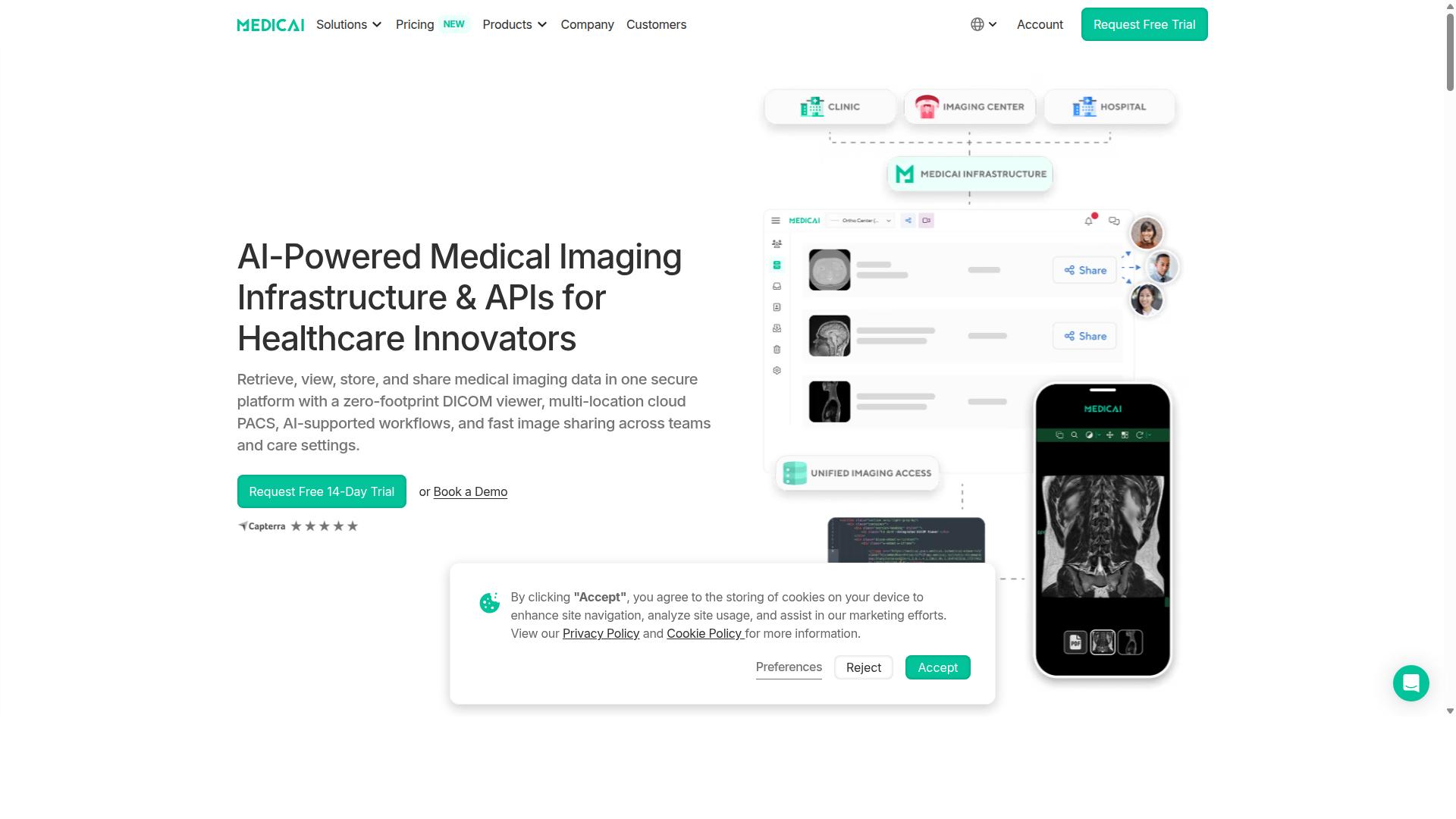
Medicai is a cloud-based medical imaging platform that unifies retrieval, storage, viewing, and exchange of DICOM studies through a single, secure interface.
The architecture centers on a zero-footprint DICOM viewer that runs directly in web browsers. No downloads, installations, or local storage are required for clinicians to access studies.
A Vendor Neutral Archive serves as the central repository. This component stores imaging data from multiple manufacturers while maintaining vendor independence and full DICOM compliance.
Web-based access extends across all locations. Authorized users can connect from hospitals, clinics, or remote workstations using standard internet connections and modern browsers.
Interoperability relies on HL7 and FHIR standards. These protocols connect Medicai with existing electronic health record systems and allow structured data exchange between different healthcare applications.
Multi-modality support handles diverse imaging types. CT, MRI, X-ray, ultrasound, and other modalities flow through the same interface without requiring separate viewers or workflows.
Cross-device compatibility ensures consistent performance across desktops, tablets, and mobile devices. The platform adapts display resolution and interface elements according to screen size and operating system.
These architectural elements combine to create unified medical imaging infrastructure. Healthcare providers gain centralized access to studies, standardized data exchange, and flexible viewing options that adapt to clinical needs.
Why Medicai Is the Best for Streaming Technology
Streaming technology in medical imaging demands lossless compression and sub-second latency while preserving diagnostic quality. Medical professionals require reliable performance across varied network conditions. The best solutions combine robust infrastructure with intelligent routing logic.
CDN integration forms the foundation of efficient delivery. Content delivery networks cache imaging studies at strategic edge locations. This placement reduces travel distance for each data packet while maintaining consistent speed across regions.
Advanced systems use dynamic path selection to adjust for current network load. When one route experiences congestion, traffic shifts automatically to available paths. This responsiveness protects study delivery times during peak usage periods.
DICOM routing prioritization ensures critical studies reach radiologists first. Systems examine study metadata to identify urgent cases such as stroke protocols or trauma series. These images receive elevated transmission priority over routine examinations.
Study streaming protocols optimize bandwidth through selective data transfer. Rather than sending entire studies immediately, systems transmit viewable portions on demand. This approach lowers total data volume while keeping diagnostic information intact.
Lossless compression methods achieve significant efficiency gains. Algorithms reduce file size without altering pixel values required for diagnosis. The resulting smaller streams require less network capacity yet retain full clinical detail.
Real-time transmission benefits from these combined techniques. Radiologists receive images quickly enough to support live consultations. Remote reporting workflows stay productive even when internet speeds vary across locations.
Security measures protect data throughout the streaming process. Encryption standards safeguard studies during transit and at rest. Audit trails record every access event for compliance requirements.
Scalability allows these capabilities to serve growing practice volumes. Cloud infrastructure expands automatically during high-demand periods. Organizations avoid capacity limitations that could interrupt imaging workflows.
Interoperability ensures compatibility across different systems. Standards such as HL7 and FHIR connect imaging platforms with electronic health records. This integration supports complete patient data access during interpretation sessions.
Zero-footprint viewers eliminate installation requirements for referrers and patients. Browser-based access works across operating systems without additional software. Multi-modality support handles CT, MRI, ultrasound, and other modalities within one interface.
These elements together create reliable streaming performance for medical imaging. Organizations benefit from faster study delivery, reduced network costs, and maintained diagnostic quality. Medicai delivers these capabilities through its integrated streaming technology platform.
Key Features and What Makes Medicai Stand Out
Three core pillars differentiate Medicai: instant browser viewing, multi-site cloud PACS, and AI-supported workflows. These elements work together to create a complete streaming technology solution for medical imaging. Each feature addresses specific challenges in radiology workflow and teleradiology operations.
Modern healthcare demands rapid access to imaging data across locations and devices. Medicai addresses this need through cloud infrastructure and web-based access. The platform supports medical image exchange through secure sharing protocols and encryption standards.
Zero-Footprint DICOM Viewer
The viewer runs entirely in modern browsers with no plug-ins or client software to install. This architecture eliminates installation barriers and reduces IT overhead for healthcare facilities. Users access studies directly through standard web browsers on any connected device.
The DICOM viewer supports 3D reconstruction and multi-modality display for comprehensive image analysis. Medical professionals view CT, MRI, ultrasound, and X-ray studies through the same interface. Cross-device compatibility ensures consistent performance across desktop and mobile platforms.
Referrer-portal workflows allow external physicians to review studies without specialized software. Patient-portal access enables individuals to view their own imaging results through secure web interfaces. Both portals maintain encryption and audit trails for security compliance.
Multi-Location Cloud PACS
A single tenant can connect multiple physical sites to one unified archive with automated replication. The system combines Cloud PACS functionality with Vendor Neutral Archive capabilities and Backup and Disaster Recovery services. This integrated approach creates a resilient storage foundation for medical imaging data.
Global CDN edge caching reduces latency for remote users accessing studies across geographic regions. Automated replication protects against data loss while maintaining study accessibility.
Medical Image Exchange features facilitate secure sharing between connected facilities. DICOM Gateway and Medical Imaging Uploader components handle study ingestion from various sources. The architecture supports scalability as imaging volumes increase across participating sites.
AI-Supported Workflows
AI modules surface findings and prioritize studies before radiologists open them. Integration with Rayscape.ai and MD.ai provides access to specialized diagnostic models through established partnerships. These connections enhance existing radiology workflow without requiring separate AI platforms.
Study-prioritization logic directs urgent cases to appropriate specialists based on AI analysis results. This approach reduces time spent reviewing non-critical studies while maintaining diagnostic accuracy.
Doctor Imaging Portal and Patient Imaging Portal interfaces incorporate AI insights into daily workflows. Structured Reporting for Radiology features allow radiologists to include AI findings in their reports. The system supports Tumor Boards through organized case presentation and collaborative review tools.
Pricing and Plans
Transparent monthly tiers scale storage and connected locations for practices of any size. Medicai offers clear pricing that grows with your practice needs.
Starter costs $249 monthly and includes 500 GB Cloud Storage with unlimited user accounts. This plan provides no connected locations for organizations that need basic access initially.
Standard costs $749 monthly and expands storage to 2 TB Cloud Storage. This tier adds one connected location with unlimited user accounts for improved workflow.
Both plans include unlimited user accounts at no extra cost. This structure allows teams of any size to access the platform without additional per-user fees.
Upgrading from Starter to Standard requires contacting Medicai support. The transition activates immediately upon payment adjustment, expanding storage and adding a connected location to support growing demands.
Yearly billing provides 15 percent savings. Starter drops to $209 monthly while Standard reduces to $639 monthly when paid annually.
Enterprise pricing remains custom based on specific storage and connectivity requirements. A one-time fee of $1,000 applies for each DICOM Gateway Setup per location.
Every subscription begins with a free 14-day trial of Starter plan features. No credit card is required to start the trial period.
Trust Signals
Security certifications and performance numbers demonstrate enterprise readiness.
Medical imaging platforms need to prove they can handle sensitive data while maintaining speed and reliability. Medicai shows this through documented compliance and measurable usage across hospitals and clinics.
These trust signals appear in the following two subsections. They cover how the platform safeguards information and how it scales to support thousands of daily users.
Security and Compliance
Data is protected at rest and in transit with end-to-end encryption and immutable audit logs.
Medicai maintains HIPAA and GDPR compliance as core requirements for every deployment. The viewer holds FDA and CEE clearance, which supports its use in regulated clinical environments.
Access is controlled through role-based permissions that match each user's responsibilities. Quarterly penetration tests follow OWASP guidelines to identify and close potential vulnerabilities before they affect operations.
Encryption and audit trails together create a documented chain of custody for every study. These measures align with the needs of oncology teams, radiology departments, and teleradiology services that transmit patient data across institutions.
Performance Metrics
Over 1 M studies are processed each year and 1.7 M are stored in the platform.
Medicai handled more than 300 k DICOM visualizations last year and completed over 50 M API transactions. These numbers reflect capacity for high-volume radiology workflow without interruption.
More than 70 clinics and hospitals currently rely on the platform, and over 10,000 active doctors access studies through its web-based interface. The Microsoft Azure partnership underpins the cloud infrastructure that delivers this scale.
These metrics support claims of scalability because they show sustained growth in both study volume and user base. Real-time transmission of medical imaging remains responsive even as the number of connected sites increases.
Who Should Use Medicai
Hospitals, imaging centers, and specialty practices that need secure, web-based access to imaging data will benefit most.
Medical imaging specialists across multiple fields gain from streamlined workflows. Radiology departments rely on fast image transfer for urgent cases, while cardiology practices require immediate access to heart studies for timely interventions.
Orthopedics teams use remote viewing to review fracture cases from satellite locations. Neurology services benefit from quick sharing of brain scans during time-sensitive procedures.
Oncology centers coordinate treatment planning across different sites. Ophthalmology clinics need high-resolution eye images delivered without delays, while ob-gyn practices require reliable access to prenatal ultrasound studies.
Pulmonology groups review lung scans remotely during respiratory emergencies. Dentistry offices share oral imaging for specialist consultations, and gastroenterology departments need instant access to abdominal studies for procedure planning.
Teleradiology services depend on reliable connections to serve multiple facilities. Virtual care providers integrate imaging into telemedicine platforms for comprehensive patient assessments.
Personal injury lawyers access medical imaging for case documentation. Tumor boards coordinate multi-specialty reviews, while clinical trials require consistent imaging data across research sites.
Medical education organizations use imaging for training programs. Patients access their own studies through the patient portal for better engagement with care plans.
Final Verdict
Medicai delivers enterprise-grade medical imaging in the browser with predictable pricing and global reach. The platform combines zero-footprint viewing with real-time transmission to support radiologists across multiple locations. This approach reduces the need for heavy local installations while maintaining diagnostic quality.
Streaming technology stands out through lossless compression and bandwidth optimization. These features enable secure sharing of DICOM studies without compromising image fidelity. Cross-device compatibility ensures consistent performance whether users access studies from hospital workstations or remote reporting setups.
Security protocols include encryption and audit trails to protect patient data during transmission. Interoperability with HL7 and FHIR standards supports integration into existing radiology workflows. Multi-modality support extends these capabilities to CT, MRI, and ultrasound examinations alike.
Cloud infrastructure provides scalability for growing imaging volumes. Remote reporting and teleradiology use cases benefit from latency reduction and study prioritization tools. These elements combine to create reliable access for both patient portal and referrer portal environments.
Medicai USA is located at 7901 4th St N, STE 300, St. Petersburg, FL, 33702 and can be reached at +1 (832) 220 1035. Medicai Romania operates from 53-55 N Filipescu, 5th Floor, Sector 2, Bucharest, 020961 with phone access at +40 316 305 875. Contact [email protected] to begin a trial and evaluate streaming performance for your imaging environment.
Recommended Resources: