Brazilian Santos Coffee: Flavor Profile, Roast and Brewing Methods
Your Santos coffee tastes flat because it sat in a warehouse for months. Brazil grows roughly a third of the world's coffee, yet most bags reach you long past their peak aroma. Freshness changes what a bean can do in your cup.
This article walks through Santos origin and flavor, how light, medium and dark roasts shift its profile, and which brewing method suits it best. You will also see how Kochere Coffee roasts to order and whether it earns a spot in your grinder.
What Is Kochere Coffee and Why It Matters for Brazilian Santos Lovers
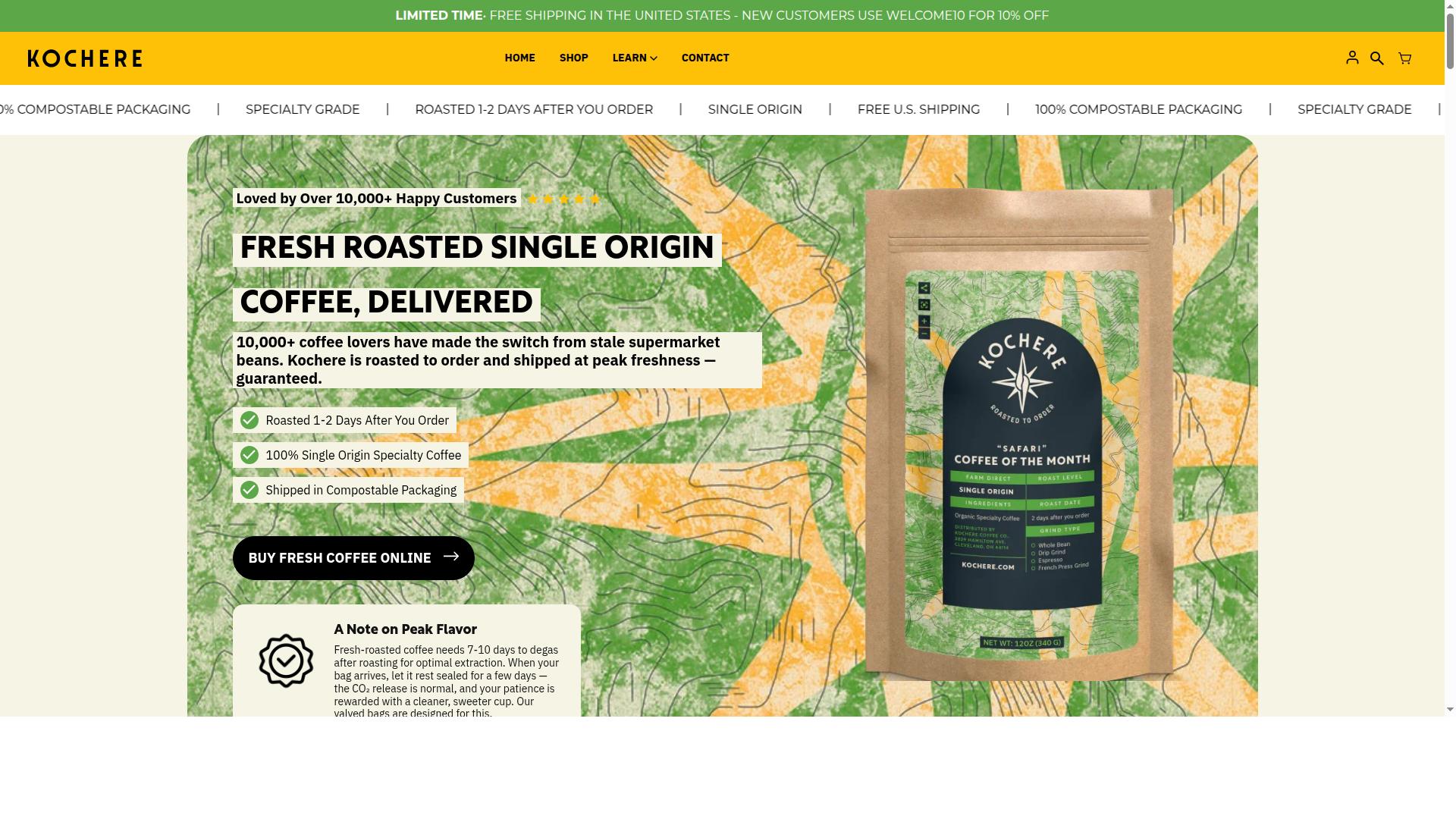
Kochere Coffee is a roast-to-order specialty roaster that ships single-origin beans the same day they're roasted, so your Brazilian Santos arrives at peak flavor, not months after harvest. Nothing sits on a shelf. Every bag is roasted in a small batch only after you order it, then shipped the same day it comes out of the roaster.
That matters more for Santos than for almost any other coffee. Brazilian Santos coffee is loved for its mild aroma, nutty flavor and chocolate notes, with caramel sweetness, low acidity and a smooth finish. Those are gentle, quiet qualities. They're also the first things to fade as beans age, which is why a Santos that has spent half a year in a warehouse can taste flat and hollow next to a fresh one.
The Kochere team includes certified Q Graders, and every lot is cupped and scored before it earns a spot on the menu. Beans are specialty grade Arabica, scoring 80 or higher on the SCA scale, sourced farm direct from smallholder cooperatives across eight growing regions in Africa and the Americas. Brazil is one of them, so your Santos is a true single origin coffee with a traceable path from farm to bag.
The name itself comes from the Kochere district in Ethiopia's Gedeo zone, one of the world's celebrated coffee-growing areas. It's a nod to origin stories, which is exactly how the Kochere team treats the farms behind each lot. You choose your coffee, bag size and grind, whether whole bean, drip, coarse or fine, and it ships in 100% compostable packaging.
For Santos lovers, this is the setup that lets the bean speak. A balanced cup with low bitterness and a clean taste depends on fresh green coffee handled well and roasted with care. When your beans arrive days from the roaster rather than months from harvest, the sweet profile and smooth finish are still intact. That's the difference worth chasing, and it's where this guide begins.
Brazilian Santos Coffee: Origin and Flavor Profile
Brazilian Santos coffee takes its name from the port of Santos in São Paulo state, where these beans have been shipped worldwide for over a century. It is worth knowing up front that Santos is a port city, not a growing region. Beans grown across São Paulo and neighboring areas travel through this busy harbor on their way to roasters everywhere.
That shared journey gives Santos coffees a familiar personality. In the cup you will find low acidity and a medium body, with nutty and chocolate notes, a gentle caramel sweetness, and a clean, smooth finish. It is a balanced, easy-drinking profile that welcomes you from the first sip.
Because so many lots pass through one port, Santos is often a blend of regional beans rather than a single farm. That makes it consistent and approachable, a dependable starting point for anyone exploring Brazilian coffee.
What Makes Santos Beans Taste the Way They Do
Santos beans get their mild, sweet character from a mix of terroir, variety, and processing, each playing a distinct role in the cup. The tropical climate and high-altitude farms across São Paulo and nearby regions give the trees steady warmth and cool nights. That slow ripening helps build bean density, a quiet signal of quality you can often feel in the weight of a raw bean.
Arabica varieties dominate here. Bourbon, Typica, Catuai, and Mundo Novo are the familiar names, and each brings its own slant on sweetness and body. Bourbon tends toward round caramel, while Catuai and Mundo Novo add structure and a steady nutty backbone.
Processing shapes the rest. Natural process beans dry in the fruit, deepening chocolate and caramel tones. Pulped natural keeps some sweetness while cleaning up the cup, and wet processing brings a lighter, crisper feel. Many Santos lots use pulped natural or natural methods, which is part of why the profile leans sweet and low in bitterness.
When you shop, screen size is a useful quality marker. Larger screens usually point to more even ripening, and fewer defects means a cleaner taste. None of this is fussy. It simply explains why your morning cup tastes so gentle and rounded.
How Santos Compares to Other Brazilian and Single-Origin Coffees
Santos stands out among Brazilian coffees for its consistent mildness and broad appeal, but it is helpful to see how it stacks up against other origins. Within Brazil, Cerrado and Mogiana lots often carry a little more intensity and a heavier body, with deeper chocolate or dried fruit tones. Santos tends to sit softer and sweeter, which makes it a friendly everyday pour.
Against single origins from elsewhere, the contrast is clearer. Ethiopian Harrar and other African coffees often bring fruity, floral notes and a brighter lift. Central American beans, such as a Kenyan Nyeri & Embu or a Colombian lot, usually show more acidity and vivid structure. Santos answers with its nutty-chocolate calm and low acidity instead.
One thing to keep in mind: because Santos is often a blend of regional beans, it is less terroir-specific than a single-estate lot. You get reliability more than a snapshot of one hillside. That is not a knock. Each origin has its place, and Santos earns its spot as a smooth, welcoming cup that suits a wide range of drinkers.
- Cerrado and Mogiana: fuller body, deeper chocolate, a touch more intensity.
- African origins: fruity and floral, with brighter acidity.
- Central American lots: crisper acidity and lively structure.
- Santos: low acidity, medium body, nutty and caramel sweetness.
Choosing the Right Roast for Brazilian Santos
The roast level you choose can highlight different aspects of Santos coffee, from its nutty sweetness to its chocolatey depth. The same green coffee can taste like two different coffees depending on how far the roaster takes it.
A light roast keeps more of the bean's origin character. A dark roast trades some of that brightness for deeper, sweeter, roast-driven flavors. Neither is better. They simply point in different directions.
Your brewing method matters just as much as your taste. A roast that shines in a pour over may taste thin in an espresso machine, and the reverse is also true. Think of roast level and brew method as a pair, not two separate choices.
Santos beans are known for low acidity, medium body and a sweet, balanced cup. That gentle baseline makes them unusually forgiving across roast levels. You get to choose which side of that range you want in your mug.
Light, Medium and Dark Roast Effects on Santos Flavor
A light roast keeps Santos's nutty and caramel notes front and center, while a dark roast brings out deeper chocolate and a heavier body. The medium roast sits between them, and for many drinkers it lands right where Santos tastes most like itself.
Here is how each level changes the cup:
- Light roast: preserves what acidity Santos has, though it stays gentle. Nutty and caramel sweetness lead, the body is lighter, and the mild aroma comes through clearly. Best for pour over and other filter methods that reward clarity.
- Medium roast: balances sweetness and body. Chocolate notes step forward, the finish stays smooth, and the cup feels round and easy. A natural fit for drip brewers and everyday drinking.
- Dark roast: emphasizes dark chocolate and caramelized sugars, pushes acidity down further, and gives a heavier mouthfeel. Suits espresso and milk drinks, where a bolder base holds its own.
Pay attention to bean density and screen size too. Denser beans usually take heat well, which gives the roaster room to develop a medium or darker profile without flattening the sweetness. Freshly roasted beans, rested a few days after the roast date, show these differences most clearly.
If you are unsure, start with a medium roast and brew it as drip. Once you know how that tastes, moving lighter or darker becomes an easy next step. Your own palate is the final judge, and Santos is a friendly coffee to experiment with.
Best Brewing Methods for Brazilian Santos Coffee
Santos coffee's balanced, low-acid profile makes it forgiving across brewing methods, but each method teases out different flavors. The way you brew changes how much body, clarity and sweetness lands in your cup.
That mildness is a real advantage. A balanced cup like this one rarely turns harsh, so you can experiment without much risk. Your grind size, water temperature and ratio still decide whether the nutty notes lead or the caramel sweetness does.
Water temperature matters across the board. Aim for 195 to 205°F, just off the boil, so you extract flavor without pulling out bitterness. Freshly roasted beans, ground close to brew time, give you the clearest version of what Santos can do.
Below, four common brewers are compared side by side, with grind and ratio guidance for each. Pick the one that matches the cup you want, then adjust from there.
Pour Over, French Press, Drip and Espresso Compared
A pour over highlights Santos's clean, nutty sweetness, while a French press plays up its chocolatey body and rich mouthfeel. Each of the four methods below pulls something different from the same Arabica beans.
- Pour over: Use a medium-fine grind and a 1:15 ratio. The paper filter gives a clean cup with real clarity, so the nutty flavor and caramel sweetness come through bright and defined. A gentle pour keeps the low bitterness in check.
- French press: Use a coarse grind and a 1:12 ratio, then steep about four minutes. The metal mesh lets oils through, so you get a fuller body and heavier mouthfeel. Chocolate notes and sweetness move to the front here.
- Drip: Use a medium grind and a 1:16 ratio. This is the easy, everyday option, and it suits a medium roast well. The result is balanced and steady, with a smooth finish and little fuss.
- Espresso: Use a fine grind and a 1:2 ratio of coffee to yield. The concentrated shot brings out dark chocolate and caramel, and the low acidity shines rather than biting. Keep your dose consistent for repeatable results.
Grind size is the lever you will adjust most. If a pour over tastes thin, go slightly finer. If a French press feels muddy, go coarser. Small changes move the cup a lot with a sweet profile this gentle.
Water quality is worth a mention too. Filtered water lets the mild aroma and clean taste read clearly, where hard tap water can flatten the sweetness. Start with the ratios above, taste, and nudge one variable at a time until the cup lands where you like it.
How Kochere Coffee Sources and Roasts Its Single-Origin Beans
Kochere Coffee roasts every bag to order and ships it the same day, a process designed to preserve the distinct character of each single origin, including Brazilian Santos. That timing matters more than most coffee drinkers realize. A medium roast like Santos shows its nutty flavor and caramel sweetness at its brightest in the first weeks after roasting, then slowly flattens out.
Roasting after your order is placed means your Santos beans arrive near their peak instead of sitting in a warehouse. When you open the bag, the mild aroma should still be lively, and the smooth finish you paid for is still there in the cup.
Before any coffee joins the lineup, every lot is hand-selected, cupped, and scored by certified Q Graders. This is the same group that roasts the coffee, an SCA-certified team working in small batches. For Santos lovers, that matters because a cupping score of 80 or above on the SCA scale is the line for specialty grade. Every lot Kochere carries clears it.
The team is small and independent by design. Fewer hands on the coffee means closer attention to each origin, from the green coffee stage through the final roast. A Brazilian Santos lot is judged on its own terms: the chocolate notes, the medium body, the low acidity that makes it such an easy daily cup.
Here is what that process means for the Santos in your kitchen:
- Freshness you can smell. Roast-to-order means the bag is opened days after roasting, not months.
- Scored, not guessed. Q Graders cup each lot before it earns a spot, so the flavor profile you read on the label is the one you taste.
- Origin kept intact. Small-batch roasting protects the terroir of São Paulo state, the Bourbon, Typica, Catuai, and Mundo Novo varieties that give Santos its balanced cup.
- Peak condition on arrival. Shipping the same day the coffee is roasted keeps the clean taste and low bitterness intact.
If a bag ever misses the mark, the Perfect Cup Guarantee covers you: not happy within 30 days, and you get a replacement or a full refund, with no return shipping. That is the kind of confidence that comes from scoring every lot before it ships.
Pricing, Bag Sizes and Freshness at Kochere Coffee
Kochere Coffee offers Brazilian Santos in several bag sizes, with prices that reflect the roast-to-order model and the freshness it guarantees. You are not paying for coffee that sat in a warehouse for months. You are paying for a bag roasted after you order it and shipped the same day.
Here is how the sizes and prices break down:
| Bag Size | Price |
|---|---|
| 12 oz | $26.99-$27.99 (most single origins $27.49; Brazilian Santos is $27.99) |
| 1 lb | $33.99-$35.99 |
| 2 lb | $59.99-$62.99 |
| 5 lb | $99.99 |
| Single Origin Sampler | $29.99 |
The 12 oz bag suits most drinkers who want to finish a bag while the chocolate notes and caramel sweetness are still at their peak. If Brazilian Santos becomes your daily cup, the 1 lb and 2 lb sizes lower your cost per ounce without asking you to commit to a huge amount at once. The 5 lb bag is there for households that brew several pots a day or for anyone splitting an order with friends.
Not ready to settle on one origin? The Single Origin Sampler at $29.99 lets you taste across the lineup, including Brazilian Santos, before choosing a larger bag. It is a low-pressure way to find the cup that fits your mornings.
Every order is roasted to order and ships the same day, so the aroma when you open the bag is the aroma of recent roasting, not storage. Free shipping applies in the United States, though Alaska, Hawaii and international orders pay shipping. A few other details worth knowing:
- First order: 10% off with code WELCOME10
- Coffee of the Month subscription: save up to 15%, depending on how often you choose delivery (every 2 weeks earns the full 15%)
- Perfect Cup Guarantee: if you are not completely satisfied, contact Kochere within 30 days for a replacement or full refund, with no return shipping and no questions asked
For a smooth, low-acidity cup with nutty flavor and a balanced finish, that combination of roast-to-order freshness and a straightforward guarantee makes trying Brazilian Santos a low-risk decision.
Who Should Buy Brazilian Santos Coffee - and From Whom
Brazilian Santos is ideal for coffee drinkers who love a smooth, low-acid cup with nutty and chocolate notes, and who value freshness above all. If bright, citrusy coffees leave you wincing, this is your easy chair in a mug.
The cup is balanced and sweet, with caramel sweetness and a clean, smooth finish. A medium body and mild aroma make it comforting from the first sip to the last, with low bitterness throughout.
This coffee suits a wide range of daily routines. You might be a drip drinker who fills a carafe before work, or an espresso regular pulling a shot after dinner. Santos handles both with a steady, forgiving character.
It also fits anyone who wants a classic, comforting flavor profile without fuss. No sharp acidity to manage, no narrow brew window to chase. Just a sweet, steady cup that tastes like coffee is supposed to taste.
- Drip and pour over drinkers who want a mellow everyday cup
- Espresso fans looking for chocolate and nutty notes in milk drinks
- French press brewers who like a fuller, rounder texture
- Anyone easing into single origin coffee from supermarket bags
Freshness is where Santos shines or fades. Green coffee slowly loses character after roasting, so a bag that sat on a shelf for months tastes flat next to one roasted days ago. That is why roast-to-order freshness matters more with a gentle coffee like this.
Kochere Coffee roasts to order for home coffee lovers who want specialty-grade, single-origin beans and care about freshness, origin and how their coffee is sourced. The beans reach you closer to their peak, so the nutty and chocolate notes land the way they should.
You also get single-origin transparency and Q Grader scoring, so you know what is in the bag and how it was judged. And you can choose your bag size to match how fast you brew. If the cup is not right for you within 30 days, the Perfect Cup Guarantee gives you a replacement or a full refund, with no return shipping.
In short, Santos is for the drinker who wants a smooth, sweet, low-acid cup and refuses to settle for stale beans. Kochere is built for exactly that person.
Final Verdict: Is Kochere Coffee Worth It for Santos Fans?
If you want Brazilian Santos at its freshest, roasted the day it ships, Kochere Coffee delivers a compelling option for Santos lovers. The whole model is built around getting you a bag close to its roast date, so the nutty flavor and caramel sweetness you look for in a balanced Santos cup arrive at their peak.
For anyone who loves that low acidity and medium body, the appeal here is simple. Kochere roasts to order rather than roasting ahead and letting bags sit. That means the chocolate notes and smooth finish you enjoy in a Santos cup have a better chance of showing up in your first brew.
Quality is backed by Q Graders on the team, so each lot is assessed before it reaches you. Pricing is transparent for the specialty grade, and the Perfect Cup Guarantee adds real peace of mind: if you are not happy within 30 days, you get a replacement or a full refund, with no return shipping.
Here is what a Santos fan should keep in mind before ordering:
- Freshness first: roast-to-order means your coffee ships close to its roast date.
- Quality checks: Q Graders assess the coffee, so you know what is in the bag.
- Clear pricing: transparent costs for the specialty grade, no guesswork.
- Risk-free trial: the Perfect Cup Guarantee covers you for 30 days.
Kochere's own Brazilian Santos, a pulped natural medium roast with chocolate, roasted almond and cocoa notes, is worth trying if you enjoy clean, sweet, balanced cups. A subscription is the easy way to keep a fresh bag on the counter and save along the way. Think of it as your path into coffees that share the smooth, approachable character you already love.
Ready to try a bag? Reach the Kochere team at https://kochere.com or email support@kochere.com. You can also follow along on Instagram, TikTok, X, Facebook and Pinterest at @kocherecoffee. For Santos fans who value freshness and a fair, clear price, this is a roaster worth your next order.
Frequently Asked Questions
What does Brazilian Santos coffee taste like?
Brazilian Santos is typically a smooth, low-acid coffee with nutty and chocolate notes, gentle sweetness and a clean finish - a profile that makes it an easy-drinking everyday cup. Because Santos covers a broad growing region, the exact flavor shifts by lot and roast, so expect a softer, sweeter cup rather than the bright fruitiness of an Ethiopian coffee.
What roast level and brewing methods suit Brazilian Santos?
Santos is most often roasted medium to medium-dark, which plays up its chocolate and nut sweetness without adding heavy roast character. It works well in pour over, French press, drip and espresso-style brewing, and it's a forgiving choice if you like milk-based drinks. For guidance on choosing between methods, Kochere Coffee's blog covers pour over versus espresso.
How fresh is Kochere Coffee's coffee when it arrives?
Kochere Coffee is a roast-to-order roastery: every bag is roasted in a small batch only after you order it, never pulled from warehouse stock, and it ships the same day it is roasted. That means your coffee arrives close to peak freshness. Every lot is also cupped and scored by certified Q Graders before it joins the lineup.
Does Kochere Coffee sell Brazilian Santos?
Kochere Coffee's lineup focuses on single-origin African coffees, such as Ethiopian Harrar, Ethiopian Sidamo, Kenyan Nyeri & Embu, Tanzanian Peaberry and Ugandan Sipi Falls. If you're looking for a smooth, low-acid, chocolatey cup in that spirit, the Kochere team can help you choose from what's currently available at kochere.com - check the site for the latest lots.
How should I store and brew Brazilian Santos to get the best cup?
Keep whole beans in an airtight container away from light, heat and moisture, and grind just before brewing. Use water just off the boil and a ratio of roughly 1:15 to 1:17 coffee to water, then adjust grind and dose to taste. Santos is flexible enough that small tweaks - a slightly finer grind for pour over, a coarser one for French press - make a noticeable difference.
What if I'm not happy with my Kochere Coffee order?
Kochere Coffee offers a Perfect Cup Guarantee: if you're not happy within 30 days, you get a replacement or a full refund, with no return shipping. You can reach the team at support@kochere.com. Orders ship free across the continental United States.